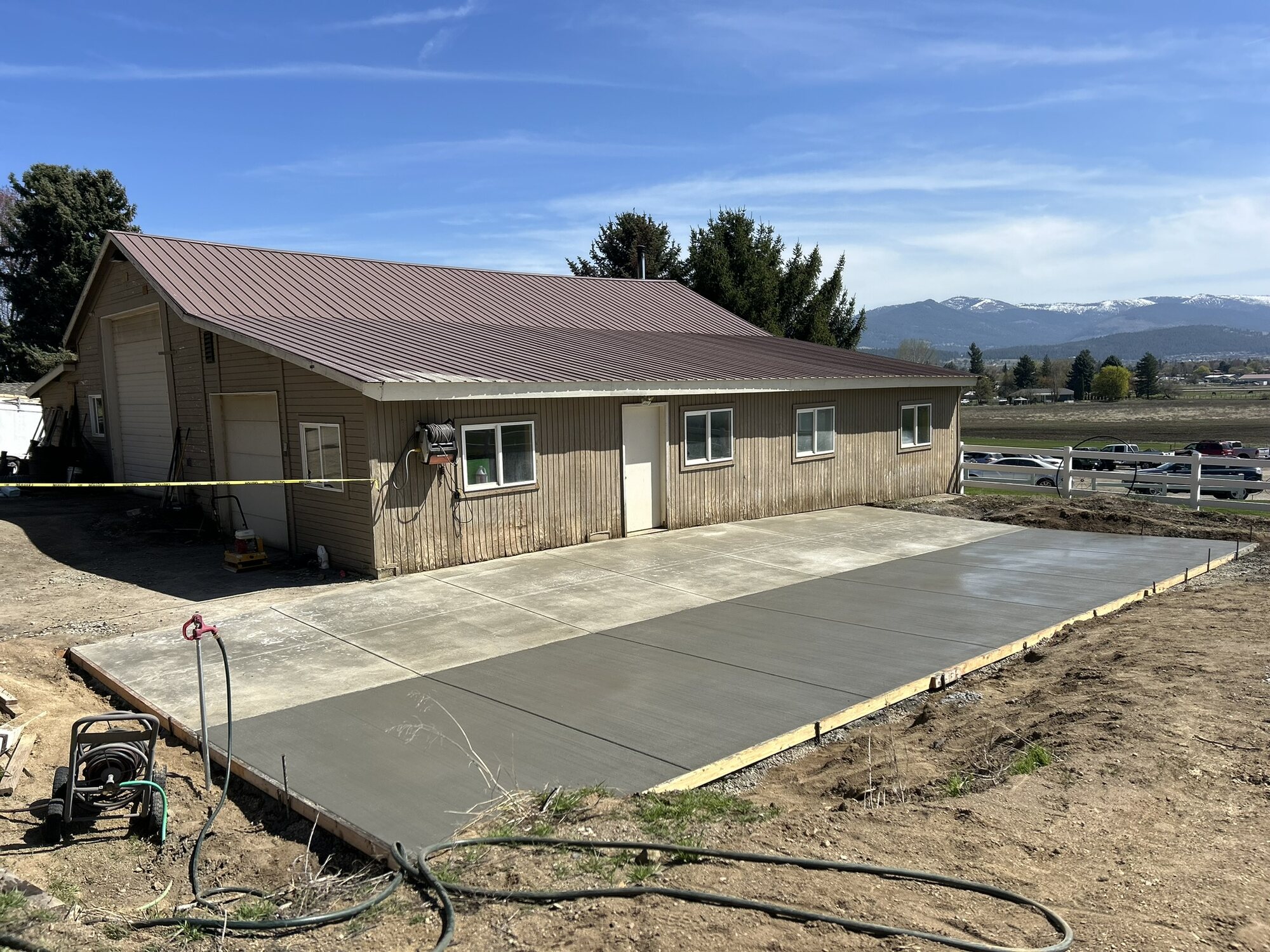
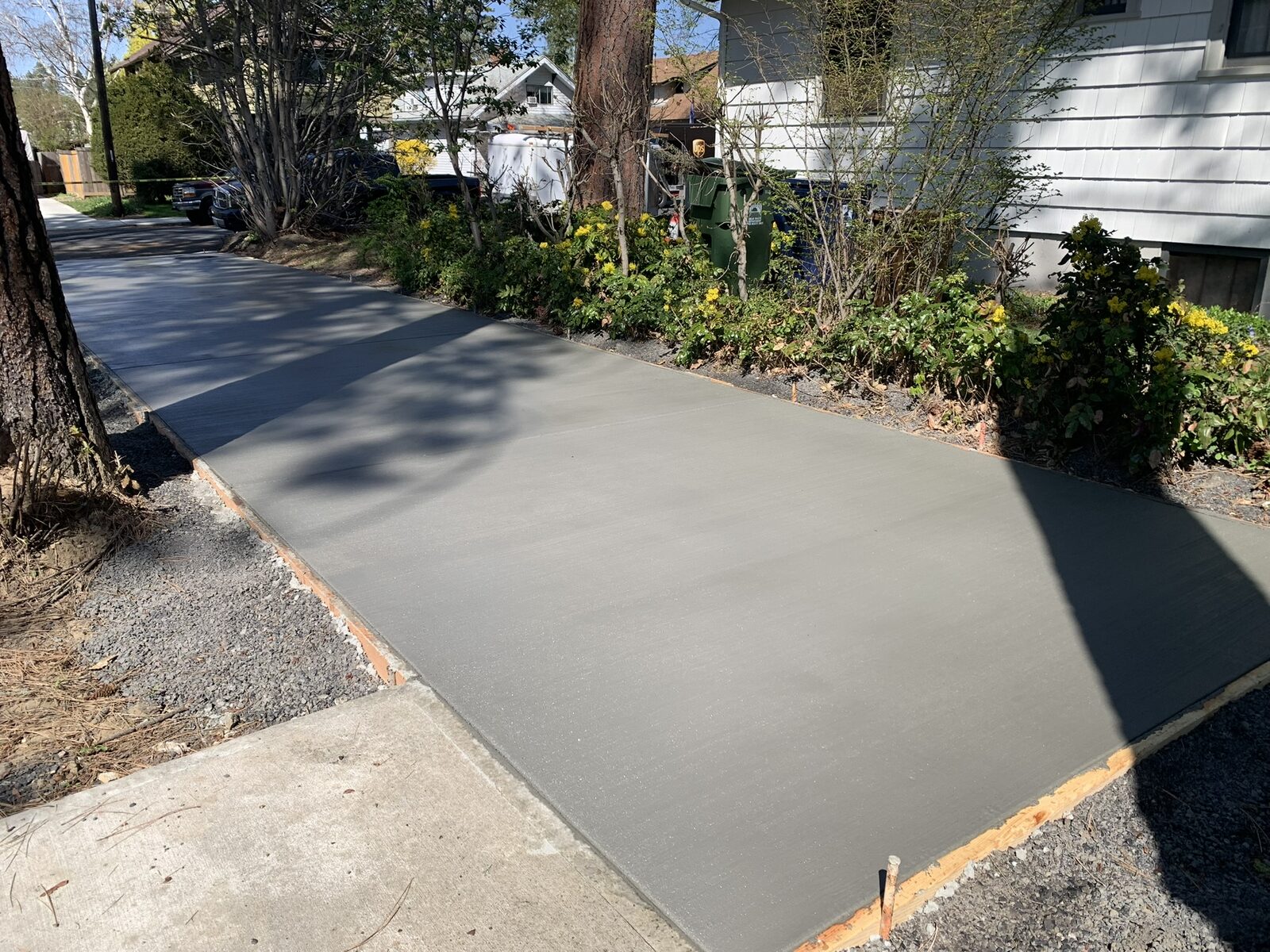
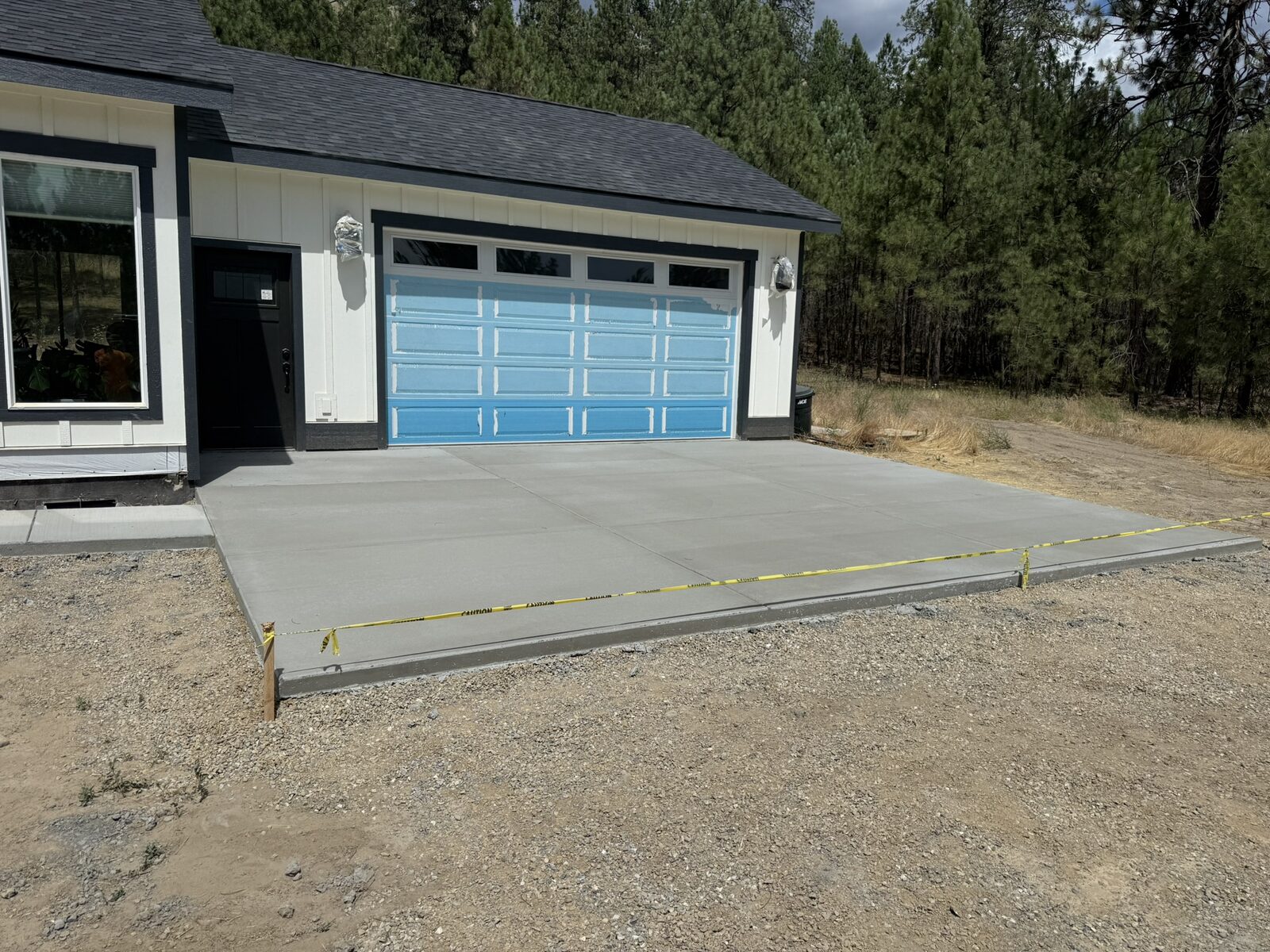
Concrete strength is important, but it is not a complete quality standard. A high-strength mixture placed over an unstable base, finished at the wrong time, or allowed to dry too quickly can still disappoint. Long-term performance comes from coordinating seven critical details.
1. The soil beneath the project
Concrete needs uniform support. Organic material, soft areas, disturbed soil, and inconsistent moisture can allow sections of a slab to settle differently. Site preparation begins by understanding what the slab will rest on.
2. Base preparation and compaction
A suitable aggregate base can create a stable working platform and more uniform support. Thickness, material, and compaction should be appropriate for the soil, drainage, intended loads, and project type.
3. Drainage and elevation planning
Water should not be treated as an afterthought. Finished elevations and slopes affect the building, landscaping, neighboring surfaces, slab edges, and soil beneath the concrete. Good layout decisions protect more than the slab itself.
4. The concrete mixture
Compressive strength is one specification. Exterior exposure, freeze-thaw conditions, workability, aggregate, water-to-cementitious-material ratio, air content, and placement conditions also affect mixture selection. Adding uncontrolled water at the jobsite can reduce quality and increase shrinkage.
5. Placement and finishing
Concrete is time-sensitive. It should be deposited close to its final location, consolidated appropriately, struck to grade, and finished in a sequence that fits the mixture and weather. Finishing too early or trapping bleed water can weaken the surface.
6. Joint layout
Concrete naturally shrinks. Control joints create intentional locations for that movement. Joint spacing, depth, timing, and alignment with corners or changes in geometry all deserve advance planning.
7. Curing and protection
Curing helps new concrete retain the moisture needed for cement hydration. It supports strength development, surface quality, and resistance to water penetration. Protection from premature drying, freezing, excessive heat, and early loading matters after the finishing crew leaves.
What is changing in the concrete industry?
Newer approaches such as internal curing supply moisture from within certain concrete mixtures to reduce early shrinkage and improve durability. These methods are especially relevant to high-performance infrastructure and illustrate an enduring principle: moisture management during early concrete development matters.