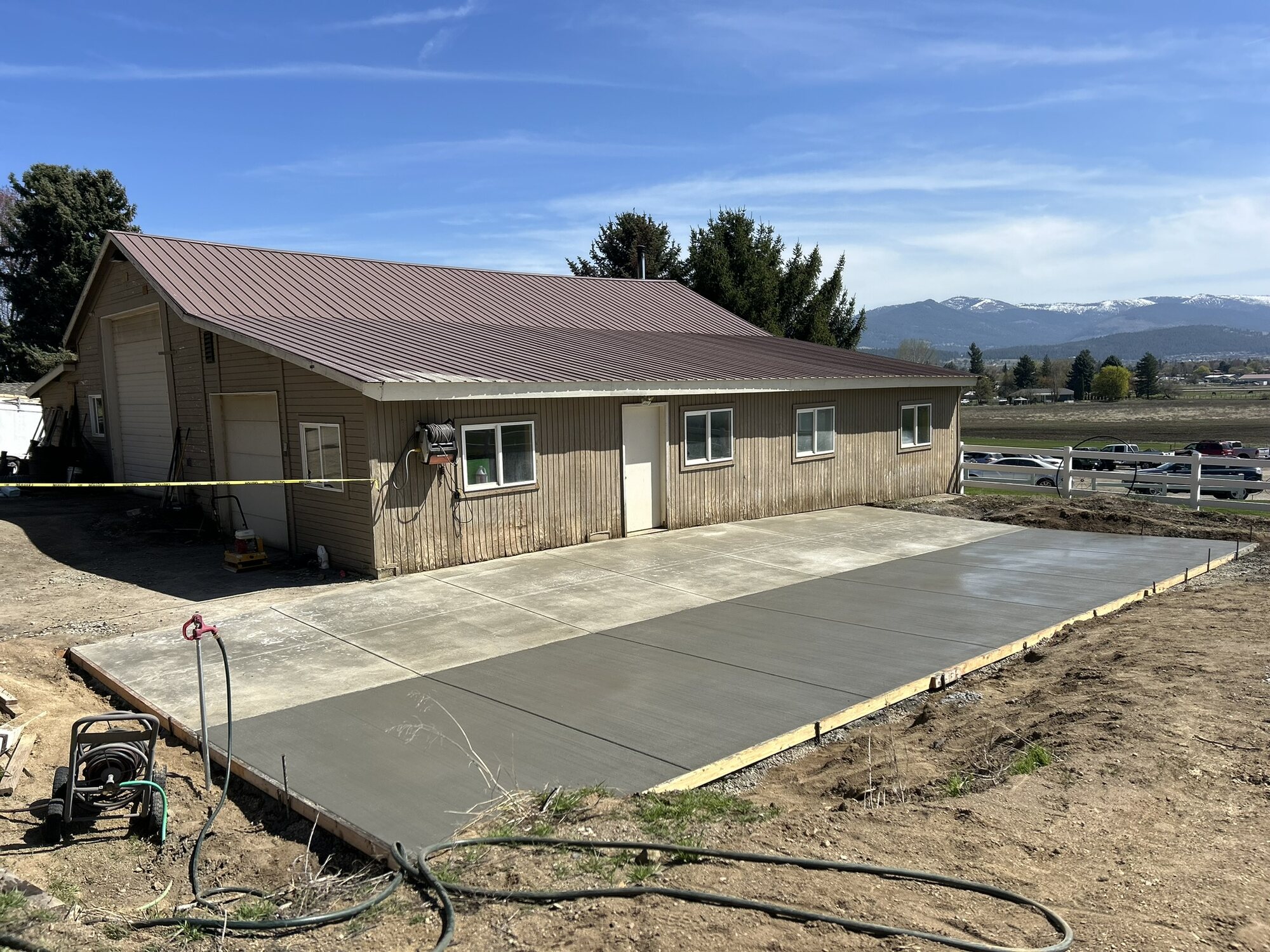
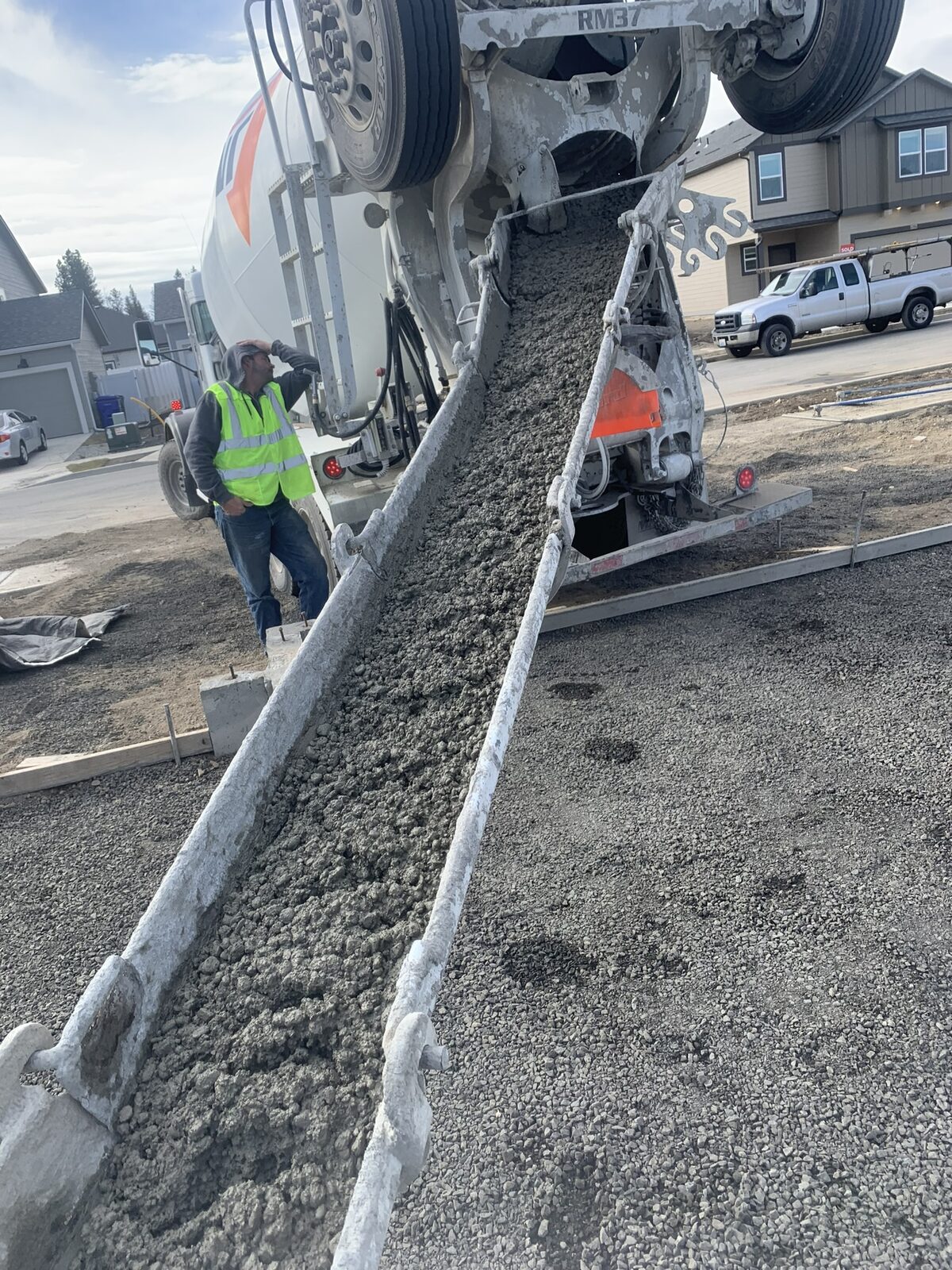
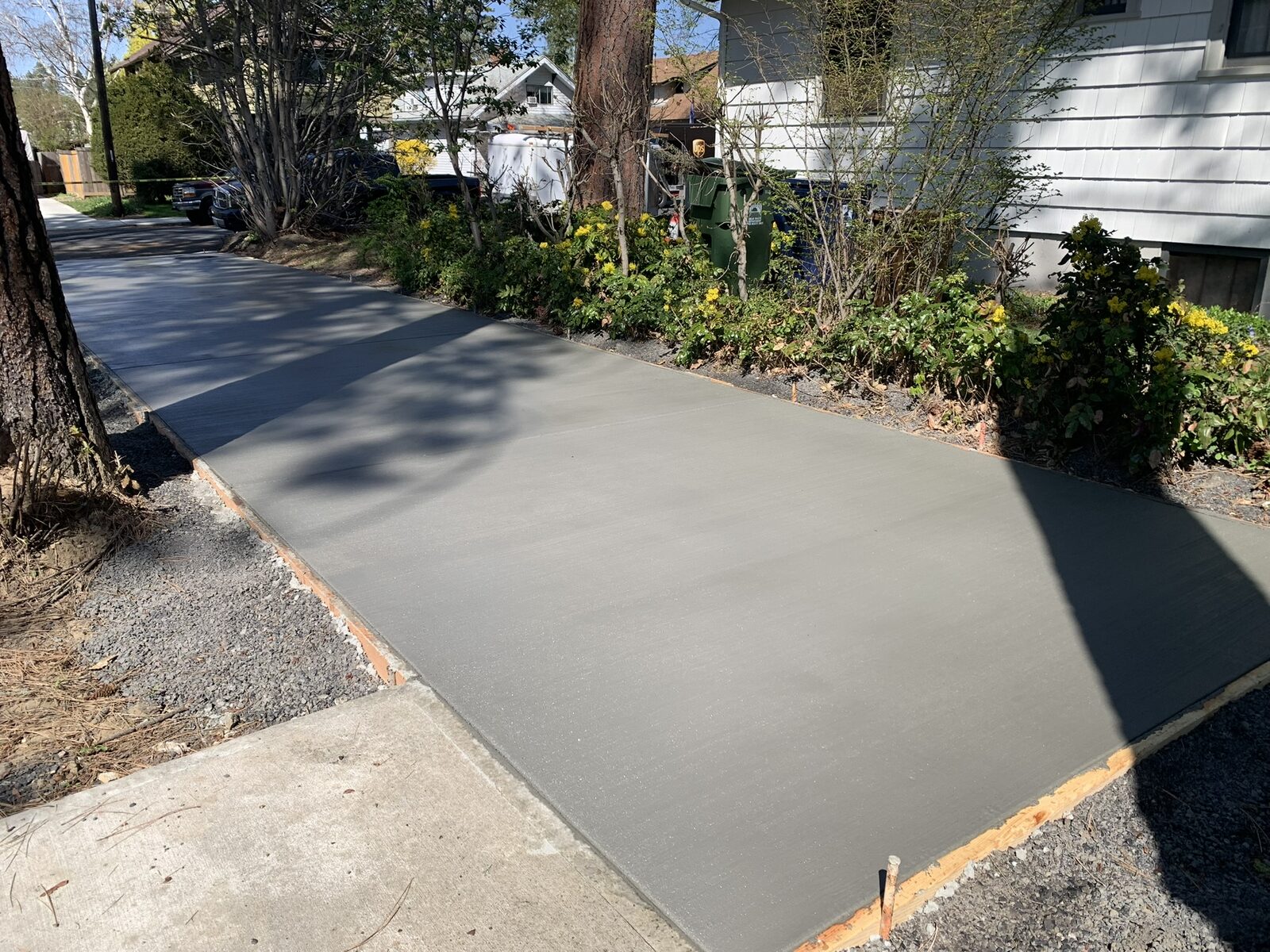
A concrete driveway, patio, walkway, or set of steps in the Spokane area has to do more than look good on installation day. It must handle freezing nights, snowmelt, changing temperatures, vehicle loads, and the water that moves across and beneath the slab.
Cold weather does not automatically ruin concrete. Durable exterior concrete is built by treating the entire installation as a system: soil, base, drainage, concrete mixture, placement, finishing, joints, and curing all work together.
Why Spokane winters are demanding
Concrete contains a network of pores. When concrete becomes saturated and the water inside freezes, that water expands. Repeated freezing and thawing can place stress on the surface and interior of concrete, especially when the mixture, drainage, or curing was not appropriate for exterior exposure.
Damage can appear as surface scaling, flaking, cracking, joint deterioration, or movement caused by frost-affected soil beneath the slab. The visible symptom may be at the surface, but the underlying cause can begin much deeper.
Six details that improve cold-weather durability
- Stable subgrade. Soft, disturbed, or inconsistent soil can allow sections of a slab to settle differently.
- Properly prepared base. A uniform, compacted base supports the concrete and helps manage moisture beneath it.
- Thoughtful drainage. Slopes and surrounding grades should move water away instead of allowing it to collect at slab edges or low spots.
- An exterior concrete mixture. Air-entrained concrete contains microscopic air spaces that give freezing water room to expand and help protect the concrete from freeze-thaw pressure.
- Well-planned joints. Concrete naturally shrinks as it cures. Control joints encourage that movement to occur in planned locations.
- Effective curing. New concrete needs time and retained moisture to develop the strength and surface durability it was designed to achieve.
Deicers and new concrete
Deicing chemicals can increase the severity of winter exposure by keeping concrete wet and contributing to repeated freeze-thaw cycling. Different products, application rates, concrete ages, and weather conditions create different risks. Avoid treating every winter surface the same way, and ask your concrete professional for project-specific care instructions.
What homeowners should ask before installation
- How will the existing soil and base be evaluated?
- Where will rain and snowmelt drain?
- What concrete mixture is appropriate for exterior freeze-thaw exposure?
- How will joints be located?
- What curing and early-use instructions should be followed?
The strongest answer is rarely a single number such as concrete strength. Long-lasting work comes from coordinating the site, mixture, placement, finish, and aftercare.